


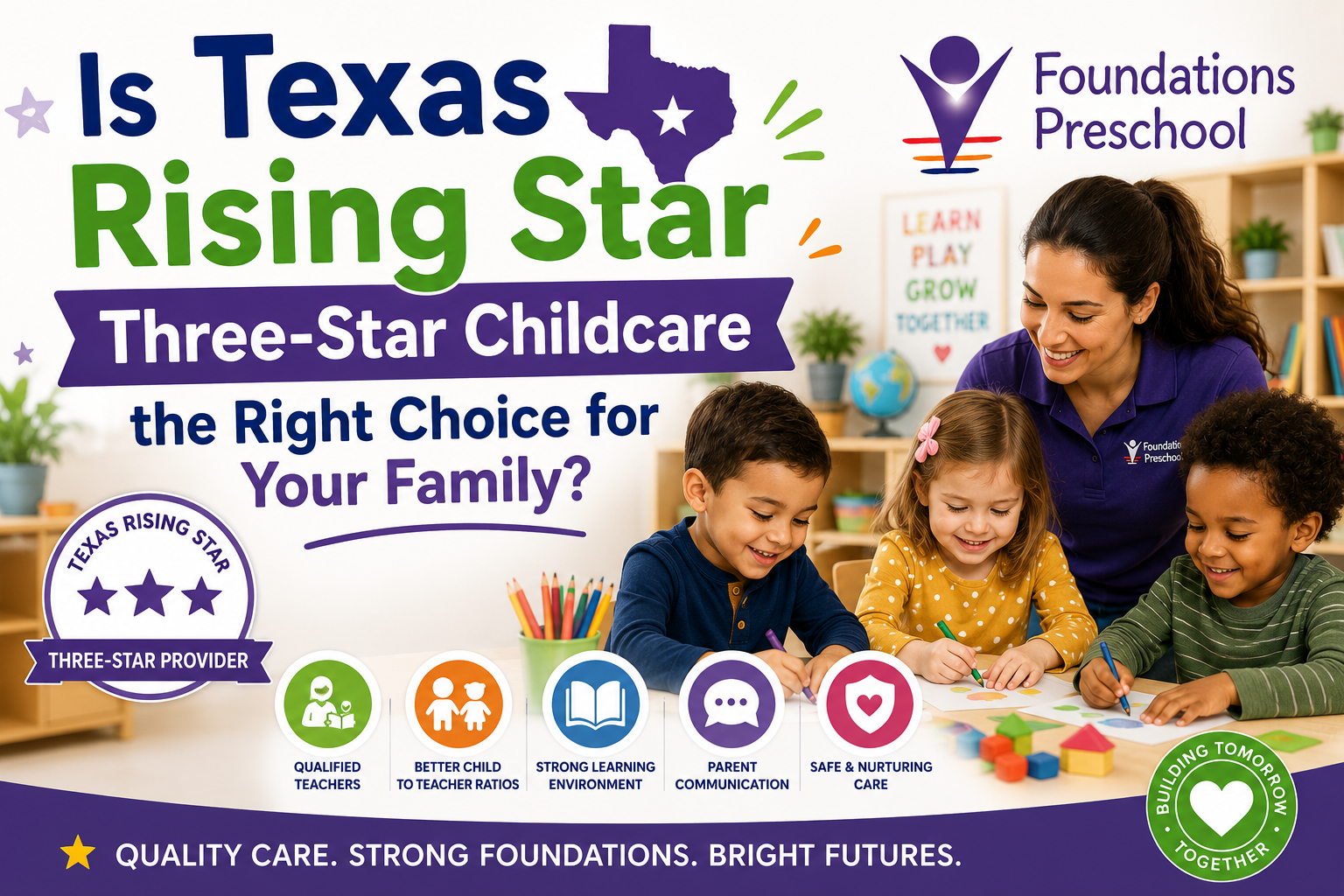
Choosing childcare is one of the most important decisions parents make. Families want a place where children feel safe, supported, and encouraged to learn. In Texas, many parents come across childcare centers that display a Texas Rising Star Three-Star rating and wonder whether it is the right fit for their child.
The Texas Rising Star (TRS) program helps families identify childcare providers that go beyond minimum licensing requirements. Different star levels indicate varying degrees of quality, and among these levels, the Three-Star designation often attracts parents because it offers a balance between affordability and higher educational standards.
But what exactly does Three-Star childcare mean? Is it worth the investment? And is it the right choice for your family’s specific needs?
This guide explores everything parents need to know about Texas Rising Star Three-Star childcare so they can make an informed decision.
Understanding the Texas Rising Star Program
Texas Rising Star is a quality improvement system created to help childcare providers strengthen educational practices and improve the learning environment for children.
Childcare centers first meet state licensing requirements and then undergo additional evaluations to receive a Texas Rising Star rating.
Programs are assessed based on several areas including:
- Teacher qualifications
- Child-teacher ratios
- Classroom environment
- Learning activities
- Family engagement
- Staff development
- Child development practices
Providers can receive:
- Two-Star rating
- Three-Star rating
- Four-Star rating
Higher ratings generally indicate stronger quality standards.
What Is Texas Rising Star Three-Star Childcare?
A Texas Rising Star Three-Star childcare center exceeds basic childcare standards and demonstrates a strong commitment to quality early education.
Three-Star providers typically create an environment where children are encouraged to:
- Learn through structured activities
- Build social skills
- Develop communication abilities
- Improve creativity
- Strengthen emotional development
These programs often serve as a middle ground between standard childcare and the highest-rated Four-Star programs.
For many parents, Three-Star childcare offers excellent value because it combines quality education with more accessible pricing.
Features of Texas Rising Star Three-Star Childcare
Understanding the features of a Three-Star program can help parents determine whether it aligns with their expectations.
Qualified Teachers and Staff
Teacher quality plays a major role in early childhood development.
Three-Star centers usually employ staff members who receive:
- Additional education
- Specialized childcare training
- Professional development opportunities
- Ongoing skill improvement
Teachers learn strategies that help children develop emotionally, socially, and academically.
Children often benefit from teachers who understand how to create engaging learning experiences.
Better Child-to-Teacher Ratios
One important factor in childcare quality is the number of children assigned to each teacher.
Three-Star programs generally maintain improved ratios compared with standard childcare facilities.
Benefits of lower ratios include:
- More individual attention
- Better supervision
- Increased interaction
- Improved classroom management
Young children often learn more effectively when teachers can spend additional time with them.
Structured Learning Environment
Three-Star childcare programs usually provide structured daily routines that support child development.
Activities often include:
Language development
Children participate in:
- Storytime
- Singing
- Vocabulary activities
- Conversations
Early literacy skills
Programs may introduce:
- Letter recognition
- Reading readiness
- Basic writing activities
Social development
Children learn:
- Sharing
- Cooperation
- Teamwork
- Communication
Physical development
Programs encourage movement through:
- Outdoor play
- Exercise activities
- Fine motor skill exercises
A structured routine helps children understand expectations and feel secure.
Strong Parent Communication
Parents often want regular updates regarding their child’s progress.
Many Texas Rising Star Three-Star centers emphasize family involvement through:
- Parent-teacher meetings
- Progress reports
- Daily activity updates
- Communication apps
- Family events
This partnership between parents and teachers supports stronger child development outcomes.
Benefits of Choosing Texas Rising Star Three-Star Childcare
There are several reasons families choose Three-Star childcare.
Quality Beyond Basic Licensing
All childcare providers in Texas must meet licensing standards.
However, Three-Star programs go further by improving:
- Educational experiences
- Learning environments
- Staff qualifications
- Child engagement
Parents often feel more confident knowing the center follows higher standards.
Supports School Readiness
Preparing children for future education is important.
Three-Star programs often help children develop foundational skills before entering kindergarten.
Children may learn:
- Basic numbers
- Letters
- Communication skills
- Listening skills
- Social interaction
Early learning experiences can make the transition to school easier.
Encourages Social and Emotional Development
Academic learning is only one part of child development.
Children also need opportunities to:
- Build friendships
- Express emotions
- Learn self-control
- Develop confidence
Three-Star childcare centers often focus on emotional well-being and positive interactions.
Strong social skills can benefit children throughout life.
Creates a Positive Learning Environment
Young children learn best when they feel:
- Safe
- Supported
- Encouraged
- Comfortable
Three-Star classrooms typically include:
- Age-appropriate materials
- Learning stations
- Interactive activities
- Organized environments
Positive environments can increase curiosity and engagement.
Potential Drawbacks of Three-Star Childcare
Although Three-Star programs provide many advantages, parents should also consider possible limitations.
Cost May Be Higher
Because Three-Star programs often invest more in:
- Staff training
- Educational materials
- Classroom quality
Tuition costs can sometimes be higher than standard childcare centers.
Families should consider whether pricing fits their budget.
Availability May Be Limited
Some areas have fewer Texas Rising Star providers.
Parents may encounter:
- Waiting lists
- Limited enrollment periods
- Reduced availability
Starting the search early can improve the chances of finding an appropriate program.
Not Every Three-Star Program Is Identical
Two childcare centers with the same rating can still feel very different.
Factors such as:
- Teaching style
- Classroom atmosphere
- Staff personalities
- Program focus
can vary considerably.
Parents should visit centers instead of relying solely on ratings.
Three-Star Versus Four-Star Childcare
Many parents compare Three-Star and Four-Star programs before making a decision.
Here is a simplified comparison:
| Feature | Three-Star | Four-Star |
|---|---|---|
| Teacher qualifications | High | Very high |
| Child-teacher ratios | Better | Best |
| Curriculum quality | Strong | Extensive |
| Parent engagement | Strong | Extensive |
| Learning environment | High quality | Highest quality |
| Cost | Moderate to high | Often higher |
Four-Star programs represent the highest quality level, but they are not automatically the best choice for every family.
Three-Star childcare often provides an excellent balance between quality and affordability.
Questions Parents Should Ask During Childcare Visits
Before selecting a childcare provider, parents should ask detailed questions.
Consider asking:
What curriculum do you use?
Understanding the educational approach helps determine whether it matches family expectations.
How are teachers trained?
Ask about:
- Certifications
- Staff experience
- Professional development
What is your child-to-teacher ratio?
Lower ratios often mean more personalized attention.
How do you communicate with parents?
Regular communication helps parents stay informed.
How do you handle discipline?
Positive guidance methods are generally preferred over punitive approaches.
What safety procedures are in place?
Parents should understand:
- Emergency plans
- Security procedures
- Health policies
Signs a Three-Star Program May Be Right for Your Family
Texas Rising Star Three-Star childcare may be a good fit if you want:
- Quality educational experiences
- Trained teachers
- Strong parent communication
- Structured learning activities
- Better classroom environments
- Reasonable balance between cost and quality
Many families find Three-Star centers meet their needs without paying premium rates associated with top-tier programs.
Signs You May Want a Different Option
You may consider other childcare choices if:
- Your budget is limited
- You prefer smaller home-based settings
- You want highly specialized programs
- You require extended scheduling flexibility
- You prefer a Four-Star learning environment
Every family has different priorities.
How to Find Texas Rising Star Childcare Providers
Parents can search for childcare providers through:
- Texas childcare directories
- Local childcare referral agencies
- Workforce development programs
- Online childcare resources
While searching, make sure to:
- Read reviews
- Visit facilities
- Observe classrooms
- Meet teachers
- Compare options
Choosing childcare should involve more than looking at star ratings alone.
Final Thoughts
Deciding whether Texas Rising Star Three-Star childcare is the right choice depends on your family’s goals, budget, and your child’s individual needs.
Three-Star programs provide a strong combination of educational quality, improved teacher qualifications, structured learning environments, and better parent communication. For many families, they offer an ideal balance between affordability and high standards.
However, the best childcare decision goes beyond ratings. Parents should visit centers, ask questions, observe interactions, and choose an environment where their child feels safe, happy, and encouraged to grow.
A childcare center is more than a place children stay during the day—it becomes an important part of their early learning journey and future development.

Leave a Reply